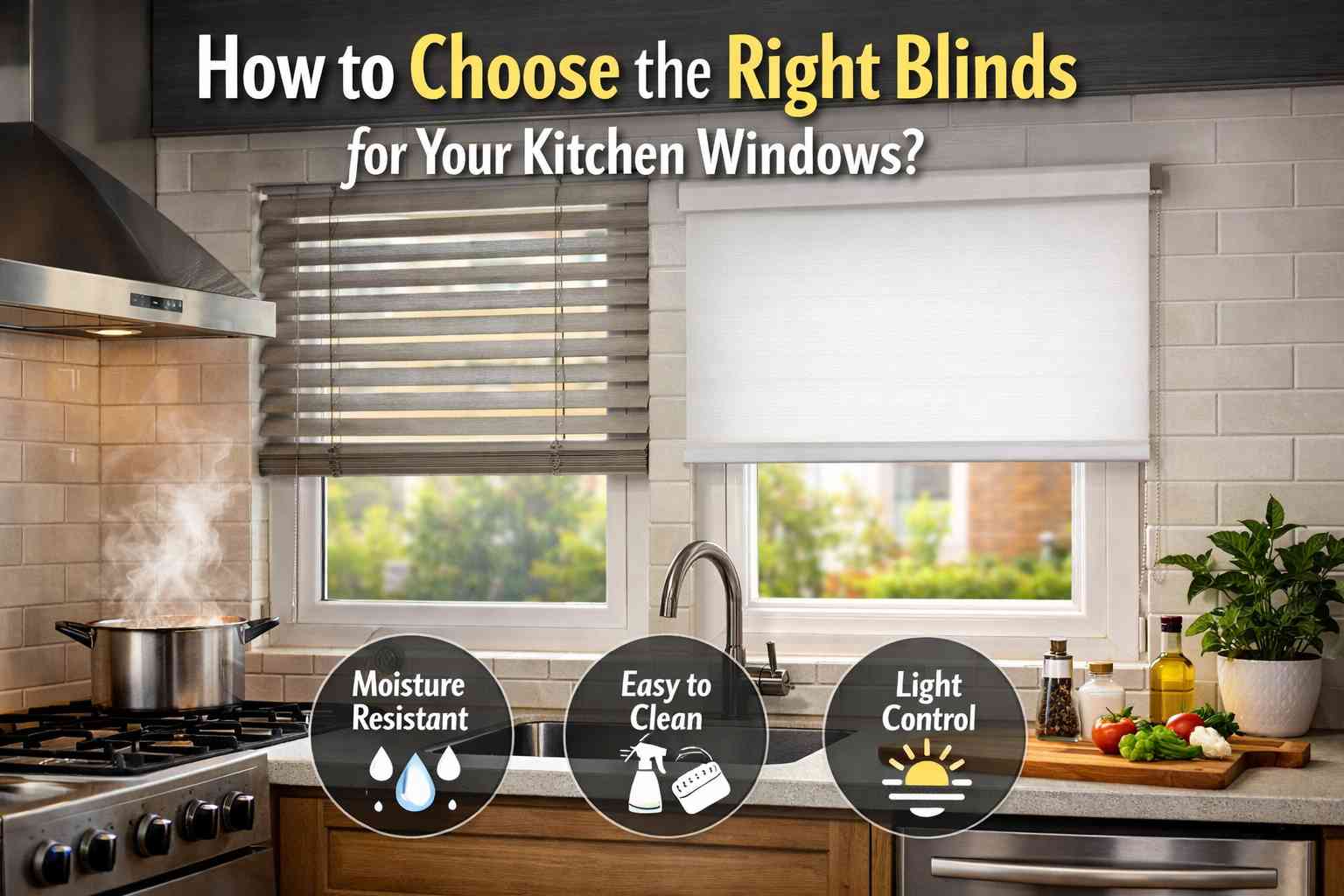
Kitchens don’t stay clean for long. Even if you’re careful, there’s always something—steam from boiling water, a bit of oil in the air, sunlight hitting the same spot every afternoon. Over time, all of that shows up on surfaces you didn’t think about at first.
Blinds are one of those things.
They look fine when you install them. But a few months in, you start noticing what actually works—and what doesn’t. Some are hard to clean. Some don’t handle moisture well. Some just feel wrong for the space.
So choosing blinds for a kitchen isn’t really about what looks best in a catalogue. It’s about what holds up in a space that gets used every single day.
Why Kitchens Need a Different Approach
Most rooms in a house are predictable. Kitchens aren’t.
There’s heat in one corner, moisture in another, and depending on where the window is, you might be dealing with direct sunlight for hours. Sometimes all at once.
That’s why the “best window coverings for kitchens” aren’t always the ones you’d pick for a bedroom or living room. Here, function comes first. If they’re difficult to clean or don’t handle humidity well, you’ll notice pretty quickly.
Start With Where the Window Is
Before thinking about materials or styles, it helps to look at the window itself.
If it’s above the sink, water is going to be part of the equation. If it’s near the stove, heat and grease matter more. If it faces west, expect strong afternoon sunlight.
This sounds obvious, but it’s often skipped. People pick blinds based on how they look—and only later realize the placement makes a difference.
Some Materials Just Make Life Easier
You don’t need to test every option. A few materials consistently work better in kitchens.
Faux wood is one of them. It handles moisture better than real wood and doesn’t require much effort to maintain. It’s not perfect, but it’s reliable.
Aluminum is another. It’s simple, doesn’t absorb anything, and can be wiped down quickly. Not everyone loves how it looks, but from a practical point of view, it does the job.
Roller shades are also common. They’re straightforward—no slats, no gaps. Just one surface that’s easy to manage.
Cleaning—This Is Where Most People Get It Wrong
This part usually doesn’t come up until later.
In a kitchen, dust isn’t the main issue. It’s everything else—grease, moisture, fine particles that settle over time. And if your blinds aren’t easy to clean, it becomes noticeable fast.
Anything with too many layers or textured fabric tends to hold onto that buildup. Smooth surfaces are easier. Wipe, done. That’s usually what people end up preferring.
Light Is Important, But So Is Control
Kitchens need light. It makes everything easier—prep, cooking, even just moving around.
But direct sunlight can get uncomfortable. It heats the space, creates glare, and sometimes hits at the worst angle.
Blinds that let you adjust light gradually tend to work better than ones that are either fully open or fully closed. It’s not about blocking light completely—it’s about controlling it.
Privacy Depends on Your Layout (Not a Rule)
Some kitchens need privacy. Some don’t.
If your window faces another house or the street, you’ll probably want something that limits visibility. But if it faces a backyard, it might not matter at all.
This is where people overthink things. There isn’t one right answer—it depends on your setup. The goal is to find a balance that feels comfortable for your space.
Style Still Matters—Just Not First
It’s easy to focus on colour and design right away. But in kitchens, that usually comes after function.
Once you’ve narrowed it down to materials that actually work, then style becomes easier to decide. Neutral tones tend to blend in better. Nothing too heavy. Nothing that feels out of place.
Most kitchens benefit from keeping things simple.
Fit Is One of Those Small Details That Isn’t Actually Small
Blinds that don’t fit properly are easy to spot.
They let in too much light, they don’t sit right, and sometimes they just feel unfinished. Even if the material is right, a poor fit can take away from it.
Custom-fit blinds avoid that issue. They’re not always necessary—but they do make a difference in how everything comes together.
Why People End Up Going with Calgary Custom Window Coverings?
At some point, the process stops being about “which blinds are best” and becomes “how do I get this done properly.”
That’s usually where a company like Calgary Custom Window Coverings comes in.
Instead of guessing sizes or trying to match things on your own, you get something that’s measured, fitted, and suited to the space you actually have. It removes a lot of the small frustrations that tend to show up later.
Conclusion
Choosing the right blinds for your kitchen windows isn’t complicated—but it’s easy to get wrong if you focus on the wrong things.
Start with how the space is used. Think about cleaning, heat, moisture, and light. The rest follows from there.
The best choice usually isn’t the most expensive or the most stylish. It’s the one that keeps working without becoming a problem.
FAQs
- What type of blinds work best in kitchens?
Faux wood, aluminum, and roller shades tend to handle kitchen conditions well. - Are wooden blinds a good idea for kitchens?
Real wood can struggle with moisture. Faux wood is usually a safer option. - How often should kitchen blinds be cleaned?
It depends on use, but generally more often than in other rooms due to grease and moisture. - Do kitchen blinds need to be waterproof?
Not necessarily waterproof, but moisture-resistant materials are a better choice. - Should I choose blackout blinds for a kitchen?
Usually not needed. Light control is more important than complete darkness. - Is custom fitting worth it?
If you want a cleaner look and better function, yes—it often makes a noticeable difference.