The energy bill arrives and you do the thing most Calgary homeowners do — you look at it, feel a bit sick, and remind yourself that this is just what winter costs here. Furnace running constantly, the house never quite warm enough near the windows, that specific chill you get sitting on the couch closest to the glass on a January evening.
What most people do not realise is that a significant chunk of that bill is leaving through the windows. Not because the windows are broken or poorly sealed — just because glass, even good double-paned glass, is a terrible insulator compared to a wall. And in a city where temperatures swing from -30°C in February to 30°C in July, that matters more than it does almost anywhere else in the country.
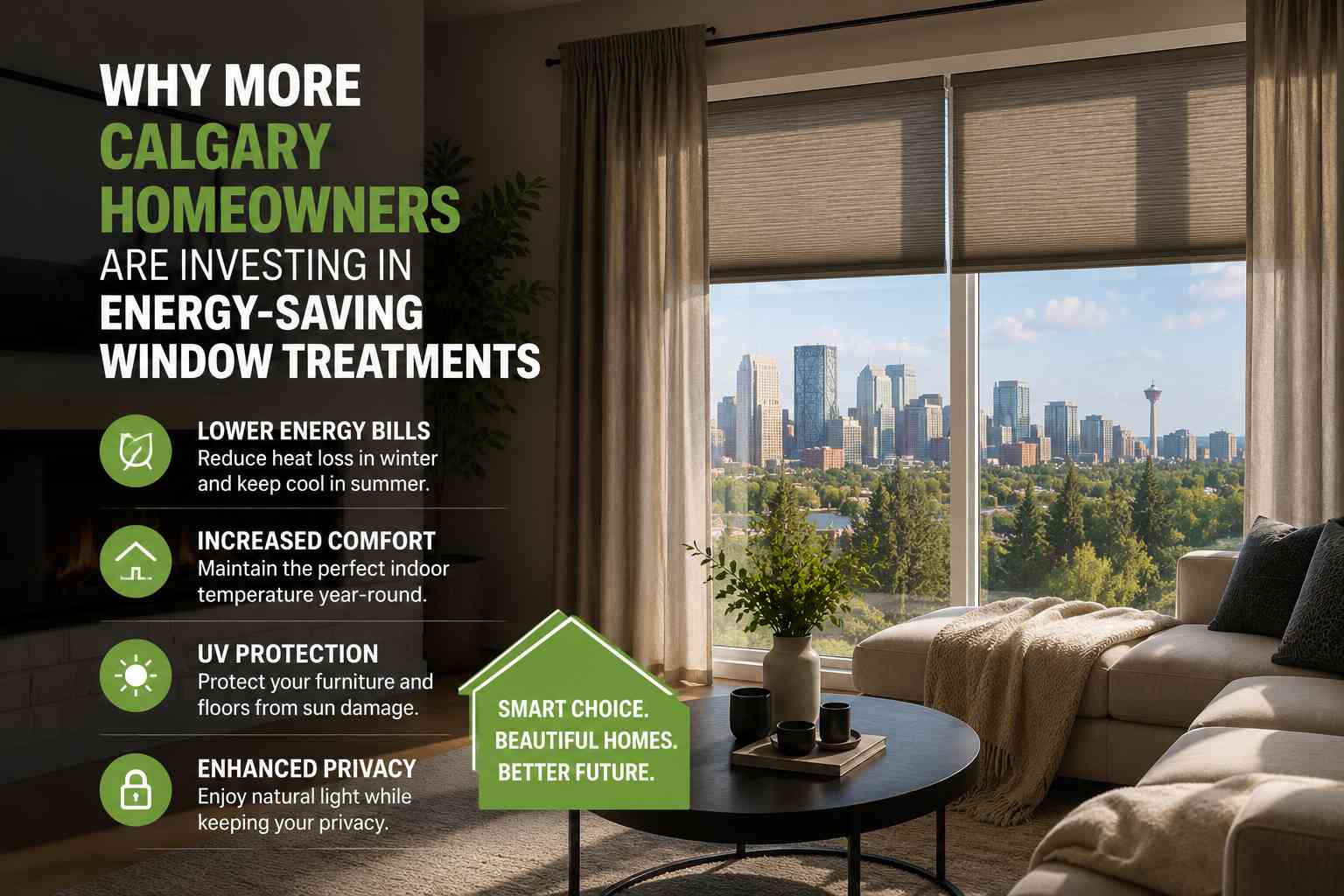
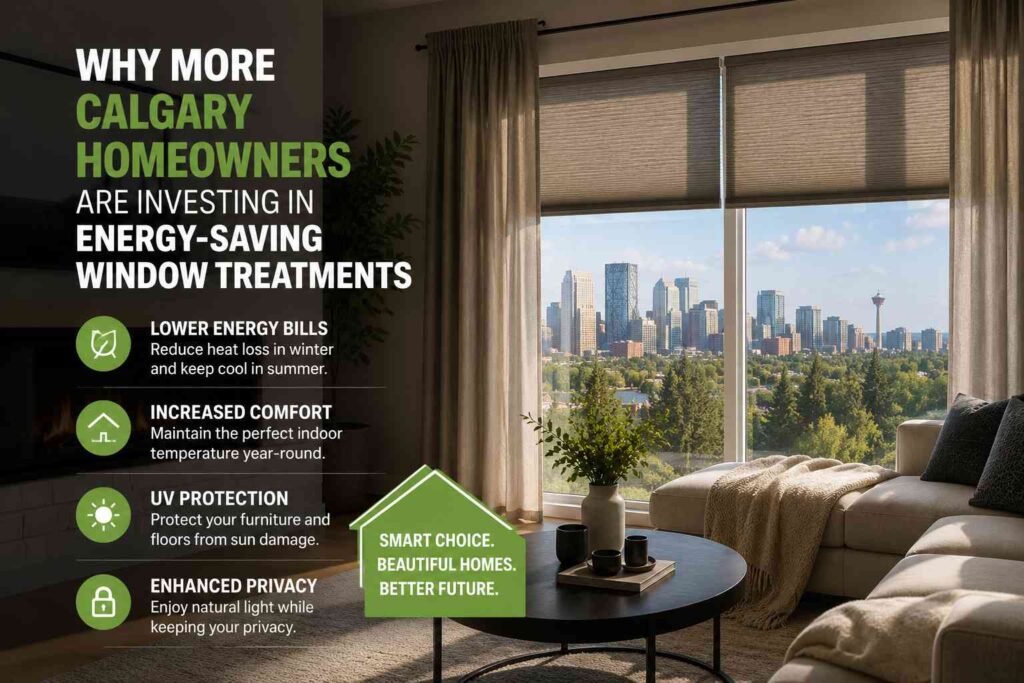
Energy-saving window treatments are not a new idea. But the reason more Calgary homeowners are actually investing in them now — rather than just vaguely intending to — comes down to a few things: utility costs that have climbed steadily, a wider range of genuinely good-looking options, and the growing realisation that this is one of the more affordable home upgrades with a real return.
The Window Energy Problem Nobody Talks About Enough
Here is a number worth sitting with: windows can account for up to 30% of a home’s heat loss in winter. In a Calgary home with large south or west-facing windows — which describes a lot of newer builds — that percentage can be even higher.
Standard blinds help a little. Thin curtains help a little more. But neither is actually designed to create a thermal barrier. They block light. They offer privacy. What they do not do is meaningfully slow down the transfer of cold from the glass into the room, or the transfer of heat from the afternoon sun into a room you are trying to keep cool.
The other thing Calgary’s climate adds to this equation is variability. A Chinook can shift temperatures dramatically within hours. The window that was fine at 9am is now a heat source by 2pm. Managing that passively — through window coverings that do their job without you having to think about it — is where energy-efficient products make a real practical difference.
What Actually Makes a Window Treatment Energy-Efficient
Not every blind or shade qualifies. The products that genuinely reduce energy transfer through windows are designed specifically to do that — and the science behind them is straightforward.
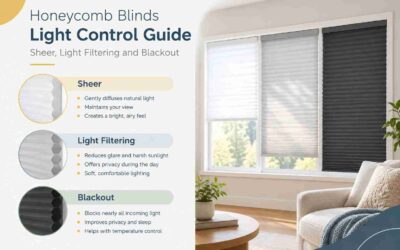
Cellular shades — the honeycomb ones — work by trapping air in small structured pockets between the window and the room. That trapped air acts as insulation. The more cells, the more insulation. A triple-cell honeycomb shade on a north-facing Calgary window in January is doing meaningful thermal work that a standard roller blind simply is not.
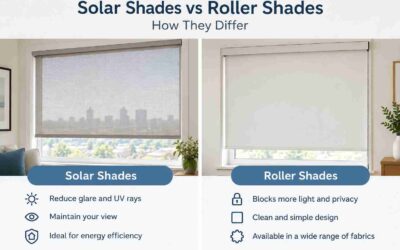
Solar roller shades work differently. They are not about insulation — they are about blocking solar radiation and UV before it enters the room. On a west-facing window in July, a quality solar shade can significantly reduce the amount of heat building up through the afternoon, which means your air conditioning is not working as hard to compensate. They also block the UV that slowly fades your flooring and furniture, which is a cost saving that tends to go unnoticed until you are replacing things earlier than expected.
The key point is that these are not just decorative choices. They are functional products that happen to also look good — and the range of styles, colours, and finishes available in 2026 is genuinely wide enough that energy efficiency does not mean settling for something bland.
Why the Numbers Are Starting to Make Sense for More People
Alberta energy costs have not been static. Utility rates have moved in one direction over the past several years, and most homeowners have felt that shift without necessarily identifying where the waste is coming from.
Energy-saving window treatments sit in an interesting cost position. They are more expensive than basic blinds. They are significantly less expensive than replacing windows, adding insulation, or upgrading an HVAC system. And unlike those larger renovations, they can be done room by room, starting with the windows that are causing the most obvious problems — the west-facing living room that gets unbearable in summer, the bedroom that is always cold at night in winter.
The return on investment timeline varies depending on the home and which products are chosen, but the combination of reduced heating costs in winter, reduced cooling demand in summer, and less UV damage to interior finishes means the math improves steadily over time. Most homeowners who have made this switch report that the comfort improvement alone — the rooms that stay warmer in winter and cooler in summer — was worth it before they even started thinking about the energy savings.
The Calgary-Specific Case for Cellular Shades in Winter
Winter is where cellular shades earn their reputation in this city. The cold wall effect — that distinct chill you feel near windows even when the room is technically at the right temperature — is the thermal transfer problem that honeycomb shades address most directly.
Set them to close at dusk every evening and you are preventing the overnight heat loss that happens when nothing is covering the glass. That consistency matters. Most people’s manual blinds are wherever they left them in the morning. A cellular shade that is actually closed when it needs to be — every single night, without anyone having to remember — is a different thing from a blind that is theoretically capable of doing the same job.
North and west-facing windows are the priority in Calgary winters. Those are the windows where cold penetration is most significant and where the right covering makes the most noticeable difference to how the room actually feels.
Managing Calgary’s Summer Sun Without Losing the View
The other side of this city’s climate is the summer. Calgary gets serious sunshine — more annual sun hours than most major Canadian cities — and by mid-afternoon in July, south and west-facing rooms can become genuinely uncomfortable even with air conditioning running.
Solar roller shades are the product designed specifically for this situation. They filter solar radiation before it enters the room, reducing heat gain without blocking the view entirely. The openness factor — how tightly the fabric is woven — determines how much light and view comes through. A 3% openness shade gives strong UV and heat protection with a slightly dimmer view. A 10% openness shade lets in more light while still cutting UV meaningfully.
What makes solar shades particularly effective in Calgary is pairing them with cellular shades on the same window. The solar shade handles summer sun. The cellular shade handles winter cold. Together they create a year-round energy strategy that addresses both sides of what this climate demands.
When Motorization Makes the Whole Thing Work Better
The challenge with any window covering strategy is consistency. The best cellular shade in the world does nothing if it is never closed at the right time.
Motorized window treatments solve this problem practically. You schedule them once — close at dusk, open at sunrise, drop the solar shades before the afternoon peak in July — and they do it every day without anyone managing it. For Calgary homeowners who are already using smart home systems, motorized blinds integrate naturally with thermostats and lighting to create a home that manages its own energy use throughout the day.
Calgary Custom Window Coverings carries motorized options across the full range of energy-efficient products. Their team can walk through your specific home — window orientations, room functions, current problem areas — and put together a recommendation that actually fits how you live, not just what looks good in a showroom.
Making the Decision
The honest version of this conversation is that energy-saving window treatments are not a dramatic renovation. They are a straightforward upgrade that addresses a real and consistent source of energy waste in Calgary homes — one that most people are already paying for without realising it.
The products have improved. The options are wider. The costs have become easier to justify against the backdrop of what energy actually costs in Alberta now. And the comfort improvement — rooms that behave the way they are supposed to through summer and winter — tends to be felt immediately.
Calgary Custom Window Coverings works with homeowners across the city to find the right combination of products for each home’s specific needs. Book a consultation and find out what the right energy-saving window treatment could mean for your comfort and your utility bill through every season this city decides to throw at you.
FREQUENTLY ASKED QUESTIONS
What is the most energy-efficient window treatment for a Calgary home in winter?
Cellular shades — also called honeycomb shades — are the strongest performer for winter insulation in Calgary. Their layered honeycomb structure traps air between the glass and the room, creating a genuine thermal buffer that reduces heat loss significantly compared to standard blinds or curtains. Double and triple-cell options offer increasing levels of insulation, with triple-cell being the best choice for north and west-facing windows where cold penetration is most significant during Alberta winters.
Can energy-saving window treatments actually lower my energy bill in Calgary?
Yes, though the exact savings depend on your home’s size, window area, current coverings, and which products you choose. The combination of reduced heat loss in winter and reduced solar heat gain in summer means your furnace and air conditioning system are working less to maintain a comfortable temperature. Over a full Calgary year — with its genuine extremes in both directions — the cumulative savings are meaningful, and most homeowners find the investment pays back within a few years through lower utility costs alone.
Do energy-saving window treatments have to look plain or industrial?
Not at all — and this is one of the reasons more Calgary homeowners are making this switch now rather than a decade ago. The range of styles, colours, textures, and finishes available in energy-efficient window treatments has expanded significantly. Cellular shades come in hundreds of fabric options. Solar roller shades are available in a wide range of tones and openness levels. The products are genuinely attractive and can be matched to any interior design direction without sacrificing their energy performance.
Which windows in my Calgary home should I prioritise for energy-saving treatments?
Window orientation is the most important factor. In winter, north and west-facing windows are the biggest source of heat loss and should be the first priority for cellular shades. In summer, south and west-facing windows drive the most solar heat gain and benefit most from solar roller shades. If budget requires a staged approach, starting with the windows that are causing the most obvious comfort problems — the coldest room in winter, the hottest room in summer — gives you the fastest return on the investment.
Are motorized energy-saving blinds worth the extra cost?
For most Calgary homeowners, yes — and the reason is consistency. The energy savings from cellular or solar shades depend on them actually being in the right position at the right time. Motorized blinds on a schedule close every evening in winter and drop before the afternoon heat peak in summer without anyone having to remember to do it. That consistency is what turns a theoretically energy-efficient product into one that actually performs as intended every single day, including when you are busy, distracted, or away from home.
How do I know which energy-saving window treatment is right for each room in my home?
The right product depends on the room’s function, its window orientation, and what problem you are most trying to solve — heat loss, heat gain, UV protection, or all three. A bedroom with north-facing windows in Calgary has different needs than a south-facing living room. Working with a local specialist who understands Alberta’s specific climate is the most reliable way to get the right recommendation. Calgary Custom Window Coverings offers in-home consultations where their team assesses your specific windows and suggests products based on your actual situation rather than a generic solution.