There’s a reason wood blinds never really went out of style, even when everyone was chasing sleek roller shades and minimalist drapery for a stretch there. Wood does something other materials just don’t — it warms a room up. Walk into a space with real wood blinds catching afternoon light, and it feels lived-in, considered, a little bit expensive-looking even if it wasn’t. That’s not marketing talk. It’s just what happens when natural material meets natural light.
We field a lot of questions about wood blinds at our Macleod Trail SE showroom, and honestly, most of them boil down to the same handful of things: real or faux, what’s it going to cost, and will it hold up in a Calgary winter? Let’s get into all three.
Why Wood Blinds Are Having a Moment Again
Part of it’s aesthetic — open-concept homes and warmer interior palettes have made wood tones popular again after a long run of cool greys and whites. But part of it is just practical. Wood blinds offer a level of light control that’s genuinely hard to match. Tilt the slats slightly and you get filtered light without losing privacy. Tilt them fully closed and a room goes properly dark, which matters more than people expect once they’ve lived with sheer curtains that do basically nothing at 6am in June.
If you’ve searched “wood blinds calgary” and landed here, you’re probably somewhere in the decision process already — maybe replacing dated verticals, maybe finishing a new build. Either way, wood is a solid contender, but it’s not automatically the right call for every window. More on that below.

Real Wood vs. Faux Wood — The Question Everyone Asks
This is genuinely the first thing to sort out, and there’s no universally right answer — it depends on where the blind is going.
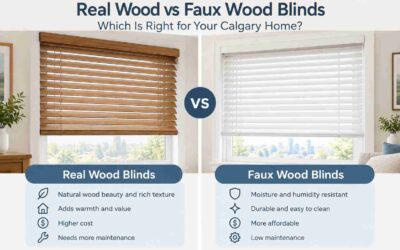
Real wood is lighter than you’d think, which matters for larger windows since the mechanism has to lift and hold the weight. It also takes stain beautifully, so if you’re matching existing trim or flooring, real wood gets you closer to a true match. The tradeoff: it’s not great in high-humidity spaces. Bathrooms, near a humidifier, anywhere steam collects regularly — wood can warp or discolour over time in those conditions.
Faux wood — usually a PVC or composite blend — looks nearly identical from a few feet away these days. Manufacturing has come a long way. It’s heavier, more moisture-resistant, and generally a bit more budget-friendly. For a kitchen near a sink, a bathroom, or a basement that runs damp, faux wood is almost always the smarter pick regardless of how much you love the real thing elsewhere in the house.
How Calgary’s Climate Actually Affects Your Decision
Our winters are dry, which actually works in real wood’s favour — low humidity means less risk of warping compared to a coastal climate. But we get big temperature swings, sometimes 20 degrees in a single day thanks to chinooks, and windows are where that swing is felt most directly. Wood handles temperature fluctuation reasonably well on its own, but a window with poor seals or older glazing can still stress the material over years of expansion and contraction near the frame.
South and west-facing windows also get intense, direct sun for a good chunk of the year here. Quality matters more on those exposures — a cheaper wood product can fade or dry out faster under sustained UV than a properly finished one will.
Slat Size, Finish, and Other Choices That Matter More Than You’d Think
Slat width isn’t just a style preference. Wider slats (2 inches is common) give a more contemporary look and let in more light per tilt adjustment, which works well in larger rooms. Narrower slats read as more traditional and suit smaller windows or more formal spaces.
Finish matters too, beyond just picking a colour you like. A matte finish tends to hide dust better day to day. A higher-gloss stain shows more detail in the wood grain but also shows fingerprints and dust more readily — worth factoring in if the blind is somewhere hands touch it often, like a patio door.
When people search “custom window blinds,” this is usually the part they haven’t thought through yet — the actual custom decisions beyond just wood versus faux wood. Cord placement, valance style, whether you want a cordless lift for child and pet safety. All of it gets built into the order, not bolted on after.
What Wood Blinds Actually Cost in Calgary
Pricing varies by window size, slat width, and whether you go real or faux — but generally, faux wood runs somewhat less than genuine wood for a comparable size and finish. A standard window typically lands in a moderate range; large windows, patio doors, or oversized picture windows cost more simply due to material and the added support hardware needed to handle the weight.
It’s worth getting an actual in-home quote rather than guessing off a price range online — every window’s a little different, and a lot of the cost comes down to specifics you won’t know until someone’s measured the space.
Caring for Wood Blinds Long-Term
Dust with a microfibre cloth or the brush attachment on a vacuum every couple weeks — this alone prevents most of the buildup that eventually needs a deeper clean. For real wood, avoid anything wet; a slightly damp cloth is fine for occasional spot cleaning, but soaking or harsh cleaners will damage the finish over time. Faux wood is more forgiving here and can handle a proper wipe-down without issue.
Matching Wood Blinds to Your Existing Decor
One thing people underestimate: wood blinds don’t need to match your flooring exactly to look intentional. In fact, an exact match can sometimes read as a little flat, like everything came from the same catalogue page. A slightly warmer or cooler tone than your floor, picked up instead from cabinetry, trim, or a piece of furniture in the room, often looks more considered.
If you’re renovating and haven’t locked in flooring yet, it’s worth having that conversation with us before ordering blinds rather than after. We can pull sample swatches side by side and see how the stain actually reads against what you’re planning, under your home’s real lighting — which is always a little different than how it looks under showroom lights.
Where Wood Blinds Work Best (and Where They Don’t)
Living rooms, bedrooms, home offices, dining rooms — wood blinds are a strong fit almost everywhere that isn’t consistently humid. For “custom blinds calgary” searches specifically looking at whole-home projects, we usually recommend real wood in the main living spaces and faux wood in kitchens and bathrooms, which gives you the warmth where it’s most visible and the durability where it’s actually needed.
FAQs
Is real wood or faux wood better for Calgary homes?
Both work well here thanks to our dry climate, but faux wood is the better choice for kitchens, bathrooms, and basements due to moisture resistance.
How much do custom wood blinds cost?
It varies by window size and material choice, with faux wood typically less expensive than real wood. An in-home measurement gives the most accurate pricing.
Will wood blinds warp in Calgary’s temperature swings?
Real wood handles our dry climate reasonably well, though south and west-facing windows benefit from higher-quality, properly finished slats due to intense sun exposure.
How wide should my blind slats be? Two-inch slats suit larger, more contemporary rooms, while narrower slats work well in smaller windows or more traditional spaces.
Can I get cordless wood blinds for safety?
Yes, cordless lift systems are available for both real and faux wood blinds and are a common choice for homes with young kids or pets.
How do I clean wood blinds without damaging them?
Regular dusting with a microfibre cloth handles most upkeep. For real wood, avoid soaking or wet cleaning; faux wood can tolerate a damp wipe-down.