This is one of the most common questions we get once someone’s already decided wood blinds are the direction they want to go. The look is similar enough from across the room that people assume the decision doesn’t matter much. It does — just maybe not for the reasons you’d guess.
The Look and Feel Difference
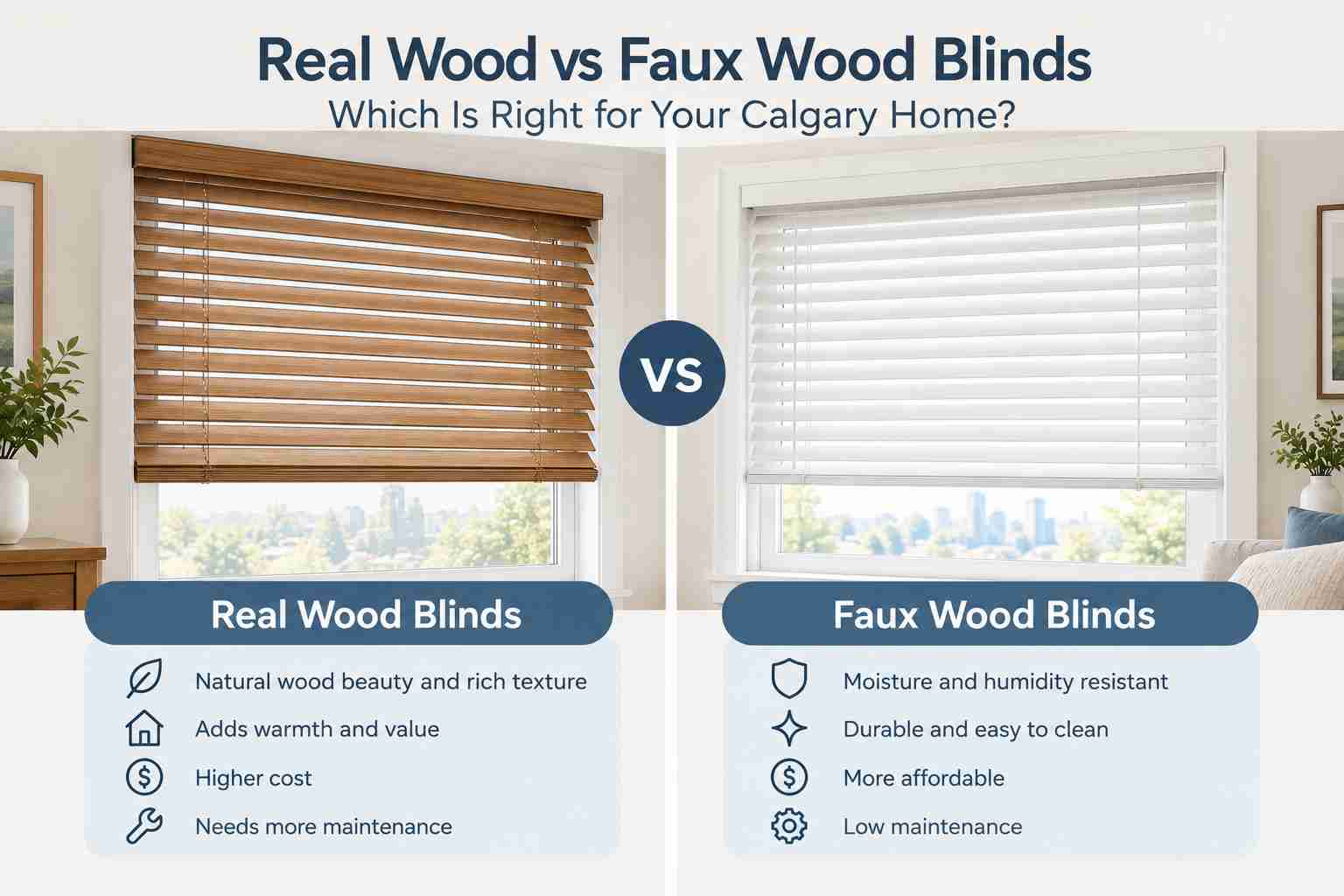
Real wood blinds have grain variation, a bit of natural weight to the slats, and a slightly different way of catching light than anything synthetic. If you’re going for a warm, high-end look in a living room or dining room, real wood does something faux materials still can’t quite replicate. Faux wood has closed the gap significantly over the years, though, and in a lot of rooms the difference is genuinely hard to spot unless you’re touching the slats directly.
If you want the fuller picture on styles, finishes, and pricing tiers, our full wood blinds buyer’s guide breaks it down room by room.
Quick Comparison Table
| Factor | Real Wood | Faux Wood |
| Look & feel | Natural grain, authentic warmth | Close imitation, very good in most rooms |
| Cost | Higher | More budget-friendly |
| Humidity resistance | Poor — can warp or crack | Excellent |
| Weight | Lighter per slat | Heavier per slat |
| Best for large windows | Yes — holds shape well | Can strain the headrail on very wide windows |
| Bathrooms/kitchens/basements | Not recommended | Ideal |
| Motorization | Available | Available |
Cost: What Drives the Price Gap
- Real wood is milled from actual hardwood, usually basswood — a lightweight, stable species that takes stain and paint well
- Faux wood is a PVC or composite blend, which is cheaper to manufacture at scale
- On a full-home project covering 10+ windows, the cost gap between the two can be substantial enough to change your decision entirely
- Faux wood often comes with better fade resistance warranties, since the material itself doesn’t dry out or discolour the way real wood can over decades
Short summary: if budget is the deciding factor across a whole house, faux wood usually wins on pure dollars — without sacrificing much on look.
Humidity and Moisture: The Real Deciding Factor
This is where the decision stops being about aesthetics and starts being practical. Real wood blinds don’t do well in moisture — bathrooms, kitchens near a sink or stove, and basements with humidity swings can cause warping, cracking, or discolouration over time. Faux wood is moisture-resistant by design and handles all of those spaces without issue.
Calgary’s dry, low-humidity climate is actually kind to real wood in most rooms — average relative humidity sits around 55% in winter and even lower in summer, so warping isn’t the constant threat it is in coastal or more humid Canadian cities. Where it gets tricky is anywhere moisture collects regardless of the outdoor climate: bathrooms, basement suites near laundry areas, and kitchens that see a lot of steam. If a room falls into that category, faux wood removes the guesswork.
For rooms that need it, our custom faux wood blinds page has fabric and finish options built specifically for moisture-prone spaces.
Weight and Window Size
Real wood is lighter than most people expect for the visual weight it carries, but faux wood composite is actually heavier per square foot. For very large or wide windows, that added weight in faux wood can stress the headrail and lift mechanism over time — real wood tends to perform better on oversized windows for this reason.
Which to Choose, Room by Room
- Living rooms, dining rooms, bedrooms (normal humidity): Real wood — this is where the look pays off
- Bathrooms, kitchens, basements, laundry rooms: Faux wood, no question
- Large or oversized windows: Real wood, for weight and mechanism longevity
- Budget-conscious, whole-home projects: Faux wood across the board, or a mix based on room priority
Plenty of clients mix both — real wood where it shows off best, faux wood where practicality wins. You can browse our full lineup of custom blinds in Calgary to see how the two options sit side by side.
Energy Efficiency Considerations
Both real and faux wood blinds add a modest insulating layer to a window, though neither compares to a true cellular/honeycomb shade for pure R-value. If energy efficiency is a bigger priority than look, it’s worth comparing against ENERGY STAR window performance standards to understand how much of your heat loss is actually happening at the glass versus the covering.
Motorization
Both real and faux wood blinds are available with cordless lift systems and motorization, so that decision doesn’t need to factor into the wood question at all.
Key Takeaways
- Real wood wins on look, large windows, and dry, climate-controlled rooms
- Faux wood wins on cost, humidity resistance, and moisture-prone spaces
- Calgary’s dry climate is generally forgiving of real wood — except where moisture collects locally (bathrooms, basements, kitchens)
- Mixing both across a home is common and practical
- Motorization is available on both, so it’s not a deciding factor
Summary
Neither option is “better” overall — it comes down to which room you’re outfitting and what you’re optimizing for. Real wood brings warmth and authenticity to living spaces with normal humidity; faux wood brings durability and value to bathrooms, kitchens, basements, and budget-driven projects. Book your free in-home consultation and bring your room list — we’ll tell you honestly where real wood makes sense and where faux wood will serve you better.
FAQs
Can real wood blinds go in a bathroom?
It’s not recommended — humidity and moisture can cause warping, cracking, or discolouration over time. Faux wood is a better fit for bathrooms.
Which is more affordable, real or faux wood blinds?
Faux wood is generally the more budget-friendly option, which matters most on larger projects covering multiple windows.
Do faux wood blinds look cheap compared to real wood?
Modern faux wood has closed the gap considerably — in most rooms the visual difference is subtle unless you’re touching the slats directly.
How long do real wood blinds last compared to faux wood?
Both last many years with proper care. Real wood can last longer in dry, climate-controlled rooms, while faux wood tends to outlast real wood in humid or moisture-prone spaces.
Can both real and faux wood blinds be motorized?
Yes — cordless and motorized options are available for both, so wood type doesn’t limit your motorization choice.