Every winter, roughly the same conversation happens at our showroom. Someone’s standing near a west-facing window in January, feeling the draft that seems to come from nowhere, and they’ve heard cellular shades might help. They’re not entirely wrong. They’re also not entirely right, because “help with energy costs” is doing a lot of heavy lifting in that sentence, and the real answer is a bit more nuanced than a single yes.
Let’s actually get into how cellular shades work, what they do and don’t do for a Calgary home specifically, and whether the cost makes sense for your situation.
What Makes a Cellular Shade Different From a Regular Blind
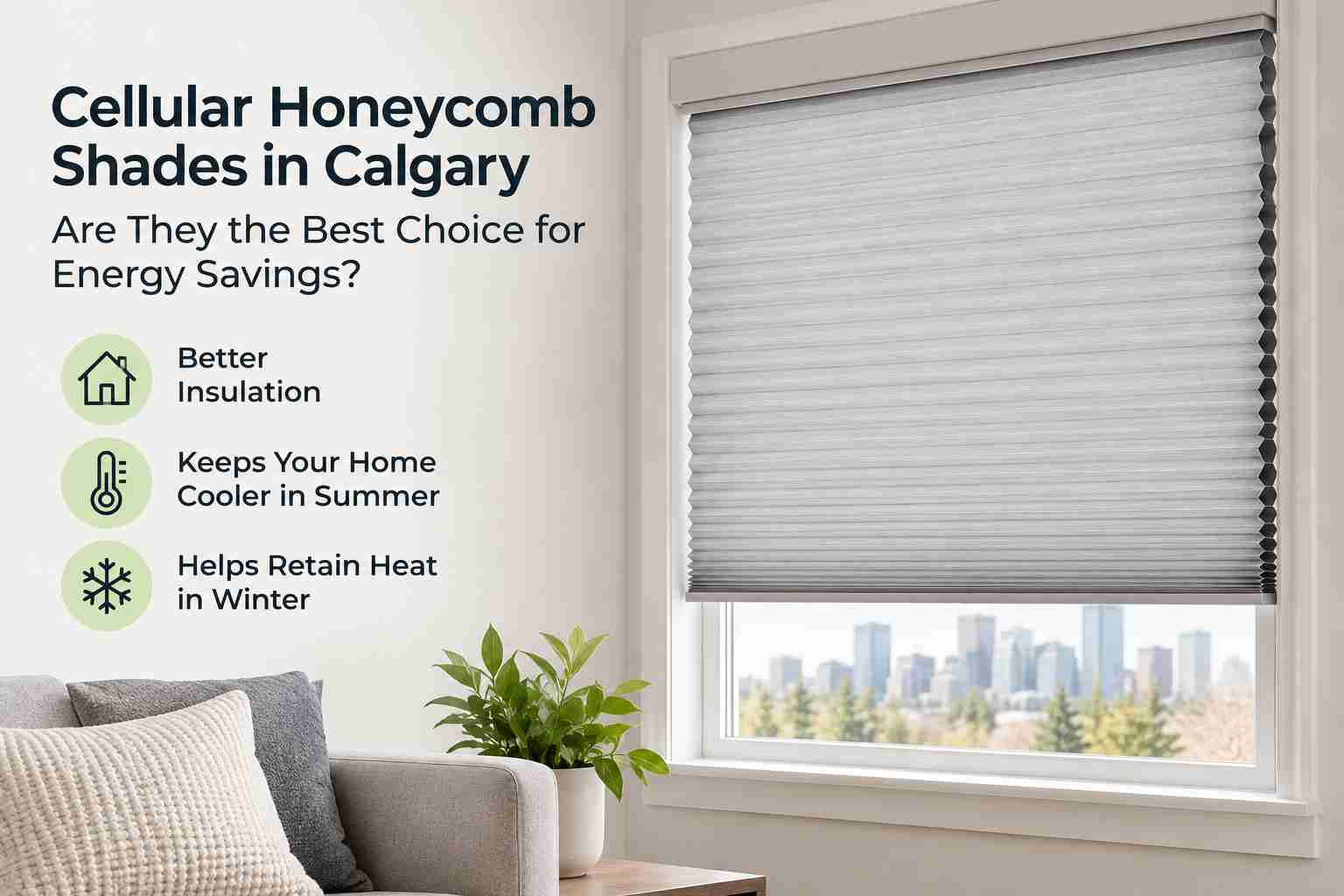
Regular blinds — wood, faux wood, aluminum — work by blocking light with solid slats. A cellular shade works completely differently. Instead of slats, it’s made of fabric folded into a honeycomb-shaped cross-section, which is where the “honeycomb blinds calgary” search term comes from, since a lot of people know the shape before they know the technical name.
That honeycomb shape creates pockets of trapped air running horizontally across the shade. And trapped air, it turns out, is one of the best insulators there is. It’s the same basic principle behind double-pane windows, just applied to fabric instead of glass.
The Science Behind the Honeycomb Shape
Here’s the part that actually matters for your heating bill. Air that’s just sitting still, not moving, conducts heat far more slowly than air that’s free to circulate. A single-pane of glass loses heat quickly because there’s nothing stopping air movement against the cold surface. A cellular shade creates a buffer zone — trapped, stationary air between your window and your room — that slows down how quickly heat transfers from your warm interior to that cold glass.
It’s not magic, and it’s not going to turn a drafty single-pane window into triple-glazed performance. But it does meaningfully reduce heat loss through the window itself, which matters a lot in a climate where windows are often the weakest point in a home’s insulation.
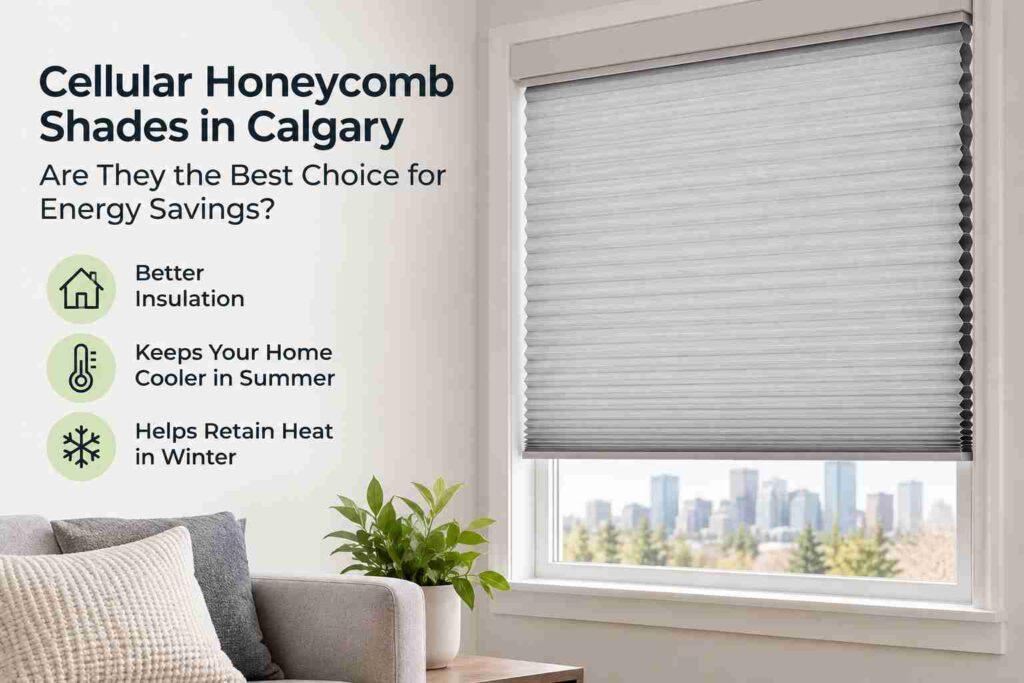
Do They Actually Lower Your Energy Bill in a Calgary Winter?
This is the honest answer people actually want: yes, but the size of the impact depends heavily on your starting point. If you’ve got newer, well-sealed, double or triple-pane windows, cellular shades add a modest additional layer of insulation — helpful, but you were already doing okay. If you’ve got older single-pane windows, especially in an older Calgary home that hasn’t been retrofitted, the difference is much more noticeable, both in comfort and in what you’re paying to heat that room.
For anyone specifically researching “energy efficient window coverings calgary,” the realistic expectation should be: cellular shades reduce heat loss and cut down on that cold-window draft feeling, they don’t replace the need for good windows if yours are genuinely failing. Think of it as one part of an overall strategy, not a standalone fix.
Single Cell vs. Double Cell — Which One Do You Need
Single-cell shades have one row of honeycomb pockets. Double-cell shades stack two rows, essentially doubling the trapped-air buffer. More insulation, but also a bit more cost and a slightly bulkier shade when fully raised.
For most rooms, single-cell is perfectly adequate and the more budget-friendly choice. Double-cell earns its keep on your worst windows — north-facing rooms that never get direct sun, older windows with known drafts, or spaces where you’ve specifically noticed temperature complaints. If you’re outfitting a whole home, it’s common to mix: single-cell in most rooms, double-cell on the problem windows.
Light Filtering vs. Blackout — Picking the Right Opacity
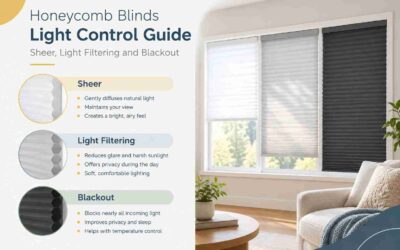
Cellular shades come in a range of opacities, from sheer light-filtering fabric that lets in a soft glow, through to full blackout for bedrooms. This is a separate decision from single versus double cell, and worth thinking through room by room. A home office might want light-filtering to keep natural light while cutting glare on a screen. A bedroom, especially for anyone dealing with Calgary’s long summer daylight hours, often benefits from blackout or near-blackout for actually sleeping past 5am in June.
Cost and Realistic Payback Period
Cellular shades cost more upfront than a basic aluminum or vinyl blind, generally landing somewhere in the mid-to-upper range of window covering options, with double-cell and motorized versions at the higher end. The energy savings alone rarely pay that difference back quickly — this isn’t really a pure financial calculation, and we’d be doing you a disservice pretending otherwise.
Where the value shows up is more in day-to-day comfort. Fewer cold spots near windows, less of that “why does this room always feel chilly” problem in winter, and a genuinely noticeable reduction in that radiant cold you feel sitting near a window on a minus-twenty day, even with the shade doing nothing but hanging there.
How Cellular Shades Compare to Other Insulating Options
Cellular shades aren’t the only product that claims to help with insulation, so it’s worth a quick honest comparison. Thermal-lined curtains, for instance, also add a layer of insulation and can be effective, but they’re bulkier, need more wall or ceiling space to hang properly, and don’t offer the same clean, contained look. Window film is cheaper and does help somewhat with heat loss, but it’s more of a supplementary fix than a real replacement for a proper window covering, and it doesn’t give you the light control that a shade does.
Compared to both, cellular shades tend to strike the best balance for most Calgary homeowners — real insulating value, genuine light and privacy control, and a look that doesn’t feel like a retrofit solution bolted onto a nice window. They’re also less disruptive to install than something like interior storm windows, which solve a similar problem but involve a much bigger project and cost.
That said, if a window’s real problem is a failing seal or cracked glazing, no window covering fixes that underlying issue. Cellular shades manage the symptom well. They’re not a substitute for a window repair if that’s genuinely what’s needed.
Where Cellular Shades Make the Biggest Difference in Your Home
North and west-facing rooms, older windows, and any space where you’ve noticed a persistent draft or cold spot are where cellular shades earn their keep the most. Bedrooms benefit from the light-blocking side of things as much as the insulation. Home offices and living rooms get a nice middle-ground option with light-filtering fabric that still adds a real insulating layer without going fully dark.
If your home is newer with high-performance windows throughout, cellular shades are still a nice-to-have for comfort and light control, just don’t expect the energy-savings angle to be the deciding factor the way it might be in an older home.
FAQs
Do cellular shades really save money on heating in Calgary?
They can meaningfully reduce heat loss, especially with older or single-pane windows, though the savings are more noticeable in comfort than in a dramatic bill reduction alone.
What’s the difference between single-cell and double-cell shades?
Double-cell shades have two stacked rows of honeycomb pockets instead of one, offering more insulation at a slightly higher cost.
Are cellular shades good for bedrooms?
Yes, especially in blackout or near-blackout opacity, which helps with both insulation and blocking Calgary’s long summer daylight hours.
How long does it take for cellular shades to pay for themselves in energy savings?
It varies widely by home and window condition, and for most homeowners the comfort improvement matters more day to day than the strict financial payback period.
Can cellular shades help with drafts near older windows?
Yes, the trapped-air design creates a buffer that reduces the radiant cold feeling near older or poorly sealed windows, even without fixing the window itself.
Do cellular shades work well in every room?
They work in most rooms, though they show the biggest benefit in north or west-facing spaces and rooms with older or draftier windows.