Every homeowner hits this decision eventually, usually standing in front of a bare window wondering why something this simple feels so complicated. Blinds, curtains, shades — they all technically do the same job, block light and give you privacy, so why does picking one feel like a bigger decision than it should be?
Because they’re not actually interchangeable, that’s why. Each one solves the light-and-privacy problem a little differently, and the “right” answer changes depending on the room, the window, and honestly, how much maintenance you’re willing to put up with five years from now. We get asked “blinds versus curtains, which is better” almost weekly at our showroom, and the truthful answer is always: it depends on what you’re optimizing for. Let’s break down what that actually means.
Why This Decision Is Harder Than It Looks
Most people start this search assuming there’s a clear winner, and get a little frustrated when there isn’t. Fair enough — but think about it this way. A kitchen and a formal dining room have completely different needs even though they’re both “rooms with windows.” One deals with grease, humidity, and constant use. The other might get opened twice a week. Same category of problem, wildly different practical requirements.
So instead of a single verdict, here’s a real comparison across the things that actually matter when you’re choosing.
Light Control — Where Each Option Actually Stands
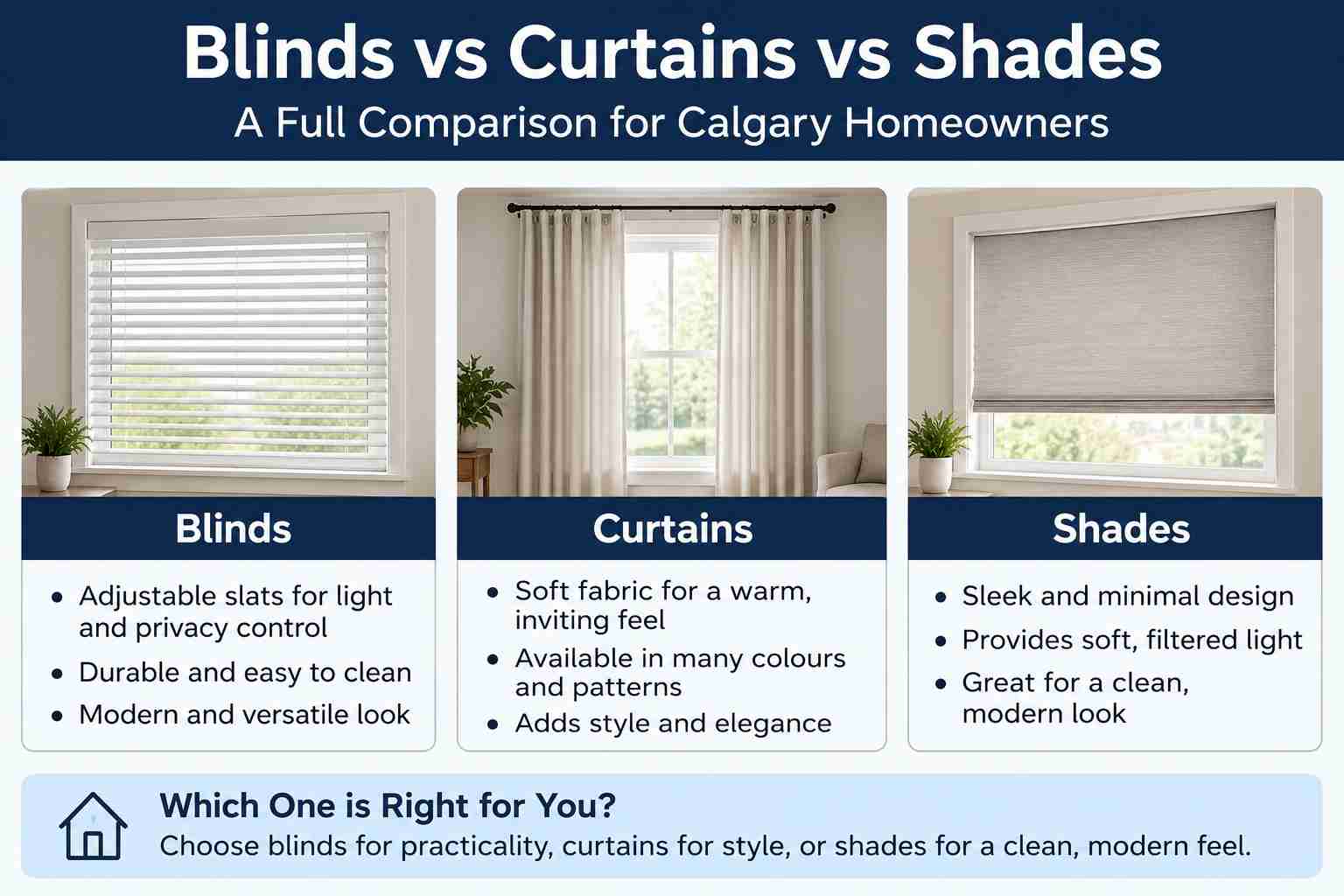
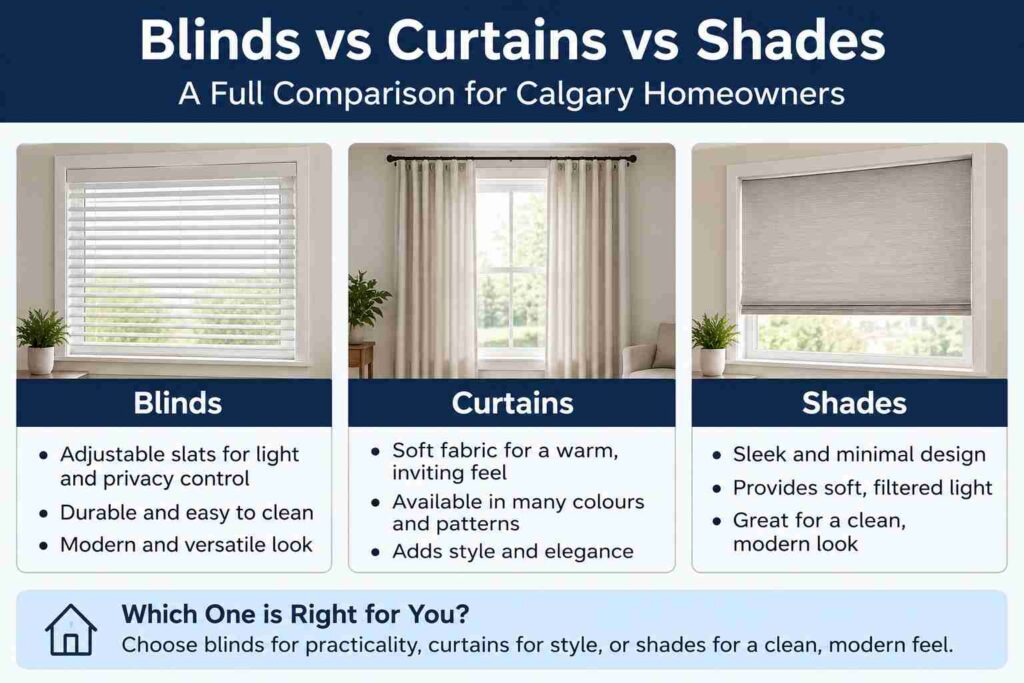
Blinds win this category for precision. Tilt the slats and you get exact control over how much light comes through, without fully opening or closing anything. Great for offices, bedrooms, anywhere you want flexibility throughout the day.
Curtains are more binary — open or closed, mostly. Sheer curtains filter light nicely but don’t really block it. Blackout-lined curtains block light almost completely but you lose that in-between option blinds give you.
Shades split the difference depending on the type. A cellular or roller shade lowers to whatever height you want, giving you graduated control top to bottom, though not the tilt-based fine-tuning blinds offer. If someone’s specifically searching “window blinds vs curtains” for light control reasons, blinds are usually the more practical answer, especially in rooms with variable daylight through the day, like a home office facing east.
Privacy — Not All Window Coverings Are Equal Here
This one surprises people. Sheer curtains, while pretty, offer almost no real privacy at night with lights on inside — anyone outside can see in clearly. Blackout curtains solve that completely but only when fully closed.
Blinds offer adjustable privacy even partially open, since the slat angle controls visibility without shutting out all the light. Shades, particularly room-darkening or blackout varieties, offer strong privacy similar to blackout curtains, but with a cleaner, more contained look since there’s no excess fabric.
For street-facing windows or ground-floor rooms, blinds or shades usually beat curtains on this front — you get privacy without needing to fully block the window.
Cost Comparison — What You’re Really Paying For
Curtains, especially off-the-rack ones, can be the cheapest entry point, though custom-made curtains with quality fabric and proper hardware climb quickly. Blinds sit in a fairly wide range depending on material — vinyl and aluminum on the lower end, real wood and motorized options on the higher end. Shades vary similarly, with basic roller shades relatively affordable and cellular or motorized shades costing more.
The honest comparison isn’t just sticker price, though. Cheap curtains fade and need replacing sooner. Cheap blinds warp or the mechanism fails within a couple years. Spending a bit more upfront on any of the three usually means not doing this project again in three years.
Maintenance and Longevity in a Calgary Home
Curtains need regular washing or dry cleaning, and fabric can hold onto dust, pet hair, and cooking odours more than people expect, especially in open-concept homes. Blinds are easier to maintain day to day, just dusting, but individual slats can bend or break over time, particularly with pets or kids nearby.
Shades are generally the lowest-maintenance option — no fabric to wash, no slats to individually damage, though the lift mechanism itself is the thing to watch as it ages. In a Calgary home with our dry winters and dusty spring winds, honestly, all three need more frequent dusting than most people budget time for.
Style and Room-by-Room Fit
Living rooms and bedrooms often work well with curtains, especially if you want softness and warmth in the room’s overall feel. Kitchens and bathrooms tend to favor blinds or shades, since they handle moisture and grease better and don’t collect odours the way fabric does. Home offices usually do best with blinds specifically, for that precise light control during work hours.
Can You Combine Them?
Yes, and honestly, this is underrated. A lot of the nicest-looking rooms we install in use blinds or shades for functional light and privacy control, layered with curtains purely for style and to soften the window frame visually. It’s not an either-or decision necessarily. If you’re weighing “curtains and blinds” together rather than against each other, that combination gives you the practical control of one and the aesthetic warmth of the other.
We see this most often in living rooms and primary bedrooms, where homeowners want the finished, layered look of curtains framing the window but don’t want to give up the everyday practicality of adjustable blinds underneath. It costs more than choosing just one, obviously, but for a main living space it’s often worth it.
A Calgary-Specific Wrinkle Worth Mentioning
Our chinooks throw a curveball into this decision that homeowners in milder climates don’t have to think about. Temperatures can jump twenty degrees in an afternoon, and that kind of swing affects window coverings more than people expect. Fabric curtains handle temperature fluctuation just fine, but blinds and shades near a poorly sealed window can feel that swing more directly through the material itself, especially vinyl blinds in extreme cold snaps, which can become slightly more brittle.
It’s not a dealbreaker for any option, just something worth mentioning during a consultation, particularly for older homes with original windows that haven’t been upgraded. If your window seals are solid, this is mostly a non-issue. If they’re original to a decades-old build, it’s worth a quick look before committing to a product.
Our Recommendation by Room Type
If you want a simple starting point: kitchens and bathrooms lean toward faux wood blinds or roller shades for moisture resistance. Bedrooms do well with blackout cellular shades or lined curtains for sleep quality. Living rooms handle almost anything well, so it comes down more to personal style. Home offices benefit most from blinds for the light control alone.
None of this is a hard rule though — every home and every window is a little different, which is honestly the whole reason a custom, in-person consultation beats guessing off a general guide like this one.
FAQs
Are blinds or curtains better for blocking light?
Blackout curtains block light most completely when fully closed, but blinds offer more flexible, adjustable control throughout the day without an all-or-nothing choice.
Which option is more affordable, blinds or curtains?
It depends on quality level for both. Basic curtains can be cheaper upfront, but quality blinds often last longer, which affects the real cost over time.
Can I use curtains and blinds together on the same window?
Yes, this is a common and popular combination — blinds or shades handle light and privacy, while curtains add style and softness.
What’s best for a kitchen, blinds or curtains?
Blinds or shades, generally, since they resist grease and moisture better and don’t hold onto cooking odours the way fabric does.
Do shades offer better privacy than curtains?
Room-darkening or blackout shades offer privacy comparable to blackout curtains, with a cleaner, more streamlined look since there’s no extra fabric involved.
Which requires less maintenance, blinds, curtains, or shades?
Shades are typically the lowest maintenance since there’s no fabric to wash and fewer individual parts than blinds, though the lift mechanism should still be checked periodically.