Quick Answer
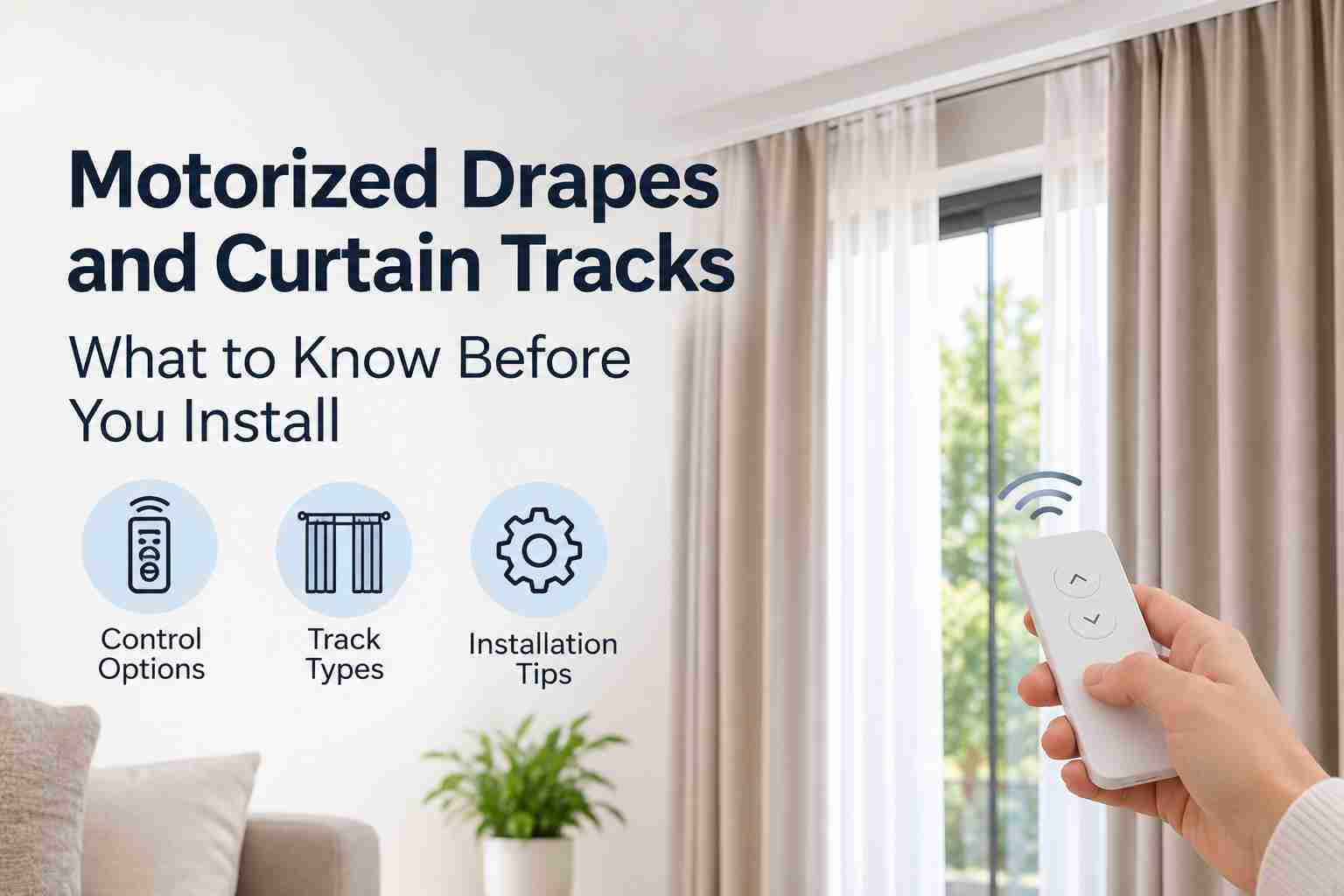
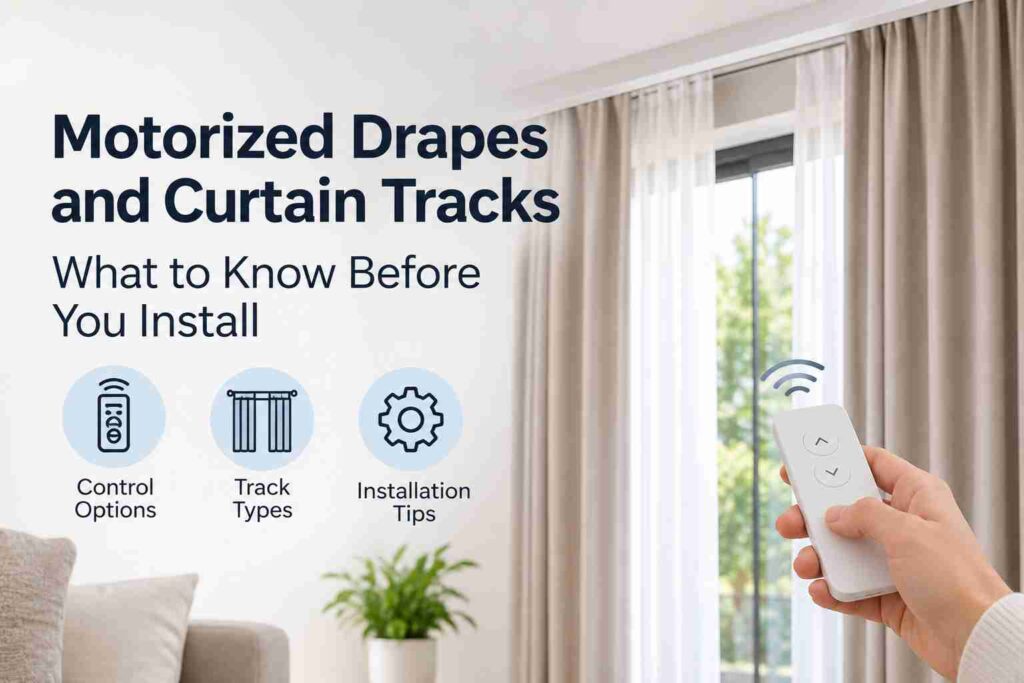
Motorized drapes run on a powered curtain track. A motor opens and closes the panels from a remote, an app, a voice command or a timer. Before you install, settle five things: the track type, the weight of your fabric, how the motor gets power, where the drapes stack when open, and which smart-home system you use, if any. Sort those out first and the install goes smoothly.
Anyone who’s dragged a heavy lined drape across a nine-foot window knows the appeal. The fabric bunches, one carrier sticks, and you end up tugging at the panel from the wrong side like you’re starting a lawnmower. Motorization fixes that. It also introduces a few decisions most people haven’t thought about, and those decisions are easier to make before the drapes are made than after.
How Do Motorized Drapes Work?
A motor sits inside or at the end of a curtain track. It pulls a belt or cord that moves the carriers, the small gliders your drapes hang from. The panels glide open or closed. Most systems also detect a gentle pull on the fabric and take over from there, though that depends on the system.
| Part | What It Does | What to Ask |
|---|---|---|
| Track | Carries the drapes along the window | Straight or curved? Ceiling or wall mounted? |
| Motor | Moves the carriers | What weight can it handle? How loud is it? |
| Carriers | Hold the drape and glide along the track | Do they suit the pleat style? |
| Controller | Remote, wall switch, hub or app | Does it work with the system I already own? |
| Power | Battery, plug-in or hardwired | Where’s the outlet, and who runs the wire? |
Why Calgary Homes Suit Motorization
Our weather is a little ridiculous. January can sit at -28°C and then a Chinook rolls in and you’re in a light jacket by lunch. Drapes that open and close on a schedule handle those swings better than anyone remembering to do it.
- Cold evenings: Closing lined drapes at dusk helps hold heat in. In November, it’s dark by about 5.
- Low winter sun: Opening them on a sunny afternoon lets that light warm the room for free.
- Early summer mornings: The sky is bright before 5:30 in June. A timer set for a later start saves your sleep.
- Tall or wide windows: Anything past reach is a chore to move by hand.
- Empty house: A schedule makes the place look lived in while you’re away.
We cover the seasonal side in more detail in our post on how motorized blinds improve comfort in Calgary’s extreme seasons. The same logic carries over to drapes.
Power Options: Pick This Early
This is the decision that most often trips people up, because it affects the wiring and the walls.
| Power Type | Good For | Watch Out For |
|---|---|---|
| Rechargeable battery | Retrofits, finished rooms, no wiring | Needs recharging; how often depends on use and drape weight |
| Plug-in | Steady power, frequent daily use | Needs an outlet near the track end; the cord should be hidden neatly |
| Hardwired | New builds and renovations | Needs an electrician and planning before drywall closes |
If you’re building or opening walls anyway, hardwired is the tidy answer. For a finished living room, battery or plug-in usually makes more sense.
Track Types and Where the Drapes Stack
The track is more than hardware. It decides how the drapes look when open.
- Straight track: Suits most windows and patio doors.
- Curved or bay track: Follows the shape of a bay window.
- Ceiling-mounted: Gives that clean, floor-to-ceiling line and hides the track in a recess or behind a valance. The pros and cons are in our post on ceiling-mounted vs. window-mounted curtains.
- Wall-mounted: Simpler where the ceiling won’t take a track.
- Double track: Lets you run sheers and heavier drapes independently, which is a nice option in a living room.
Then there’s the stack-back, the space the bunched fabric takes up when the drapes are open. Plan a stack wide enough that the open drapes don’t cover the glass. Otherwise you lose light you paid for.
Fabric Weight Matters More Than You’d Think
Motors have weight limits. Heavy lined or thermal drapes, which are common in Calgary for obvious reasons, need a motor rated for that load. Tell your installer the finished width, the lining and the pleat style up front. Ripple fold and pinch pleat both work on powered tracks, but they hang differently, and the carriers need to match.
How You’ll Control Them
| Control | Best For | Heads-Up |
|---|---|---|
| Handheld remote | Simple setups | Easy to lose. Mount a holder |
| Wall switch | Bedrooms, living rooms | Needs a spot near the window |
| App | Scheduling, multiple rooms | Check how it connects: hub, Wi-Fi, or Bluetooth |
| Voice assistant | Hands-free | Confirm compatibility with Alexa, Google or Apple first |
| Timers and scenes | “Close at sunset” | Set it once, then adjust by season |
If you’re building a connected home, read our overview of smart window coverings. The short version: don’t assume any motor works with any hub. Ask before you order.
Pre-Install Checklist
Before ordering your motorized drapes, work through these seven points:
- Measure the full window width plus the stack-back on each side.
- Decide on ceiling or wall mounting, and check what’s behind the drywall.
- Choose your power source and locate the nearest outlet.
- Weigh the fabric, or at least know the lining and pleat style.
- Confirm the smart-home system and what it’ll talk to.
- Ask what happens in a power outage and whether the drapes can still be moved by hand.
- Plan for a corner or return if the drapes need to wrap.
Mistakes We See Most Often
- Ordering the motor first and the fabric second, so the motor is underpowered.
- Skipping the stack-back and then covering a third of the glass.
- Forgetting the outlet until the track is up.
- Choosing a system that doesn’t work with the phone or hub already at home.
- Hanging heavy drapes on a track rated for sheers.
What Affects the Cost?
We won’t throw a number at you here, because it varies a lot. What moves the price: track length and shape, motor type, drape size and fabric, number of windows, and any control hub. A free in-home consultation is the fastest way to price it for your windows. You can read more about window treatment motorization or visit our showroom on Macleod Trail SE.
Key Takeaways
- Motorized drapes use a powered track, not a motorized rod you retrofit.
- Pick the power source first: battery, plug-in or hardwired.
- Heavy lined drapes need a motor rated for the weight.
- Plan the stack-back so open drapes don’t block the glass.
- Check smart-home compatibility before you order.
- Schedules are the real win in Calgary’s swingy climate.
Summary
Motorized drapes are a practical upgrade for tall windows, heavy fabric and our climate. Decide the track, the power and the control system together, tell the installer what the fabric weighs, and the rest follows.
Frequently Asked Questions
How Much Weight Can a Motorized Curtain Track Handle?
It depends on the motor and track. Lighter sheers need far less than lined, interlined drapes. Give your supplier the fabric details so they can match the motor.
Can I Motorize My Existing Drapes?
Often yes, if the heading and pleat style fit a powered track and the fabric isn’t too heavy for the motor. A quick look at your drapes will confirm.
Do Motorized Drapes Work During a Power Outage?
Battery-powered motors keep working. Plug-in and hardwired ones depend on the system, and many can still be moved by hand. Ask before you buy.
Are Motorized Drapes Noisy?
Modern motors are quiet but not silent. You’ll hear a soft hum. It’s a fair trade for not lifting a heavy panel by hand.
Will They Work with Alexa or Google Home?
Many systems do, but it varies by brand and hub. Check the compatibility list before ordering.