Quick Answer
Double cell honeycomb shades have two layers of air pockets instead of one. That usually means better insulation, a little more sound dampening and a higher price. In Calgary, the upgrade tends to pay off on large, drafty, north-facing or bedroom windows. On small windows in newer homes with good glass, single cell is often plenty.
Somebody stands at a showroom sample board, fingers on two fabrics that look almost identical, and asks: “So what am I paying extra for?” Fair question. The difference is mostly hidden inside the shade.
What’s the Actual Difference?
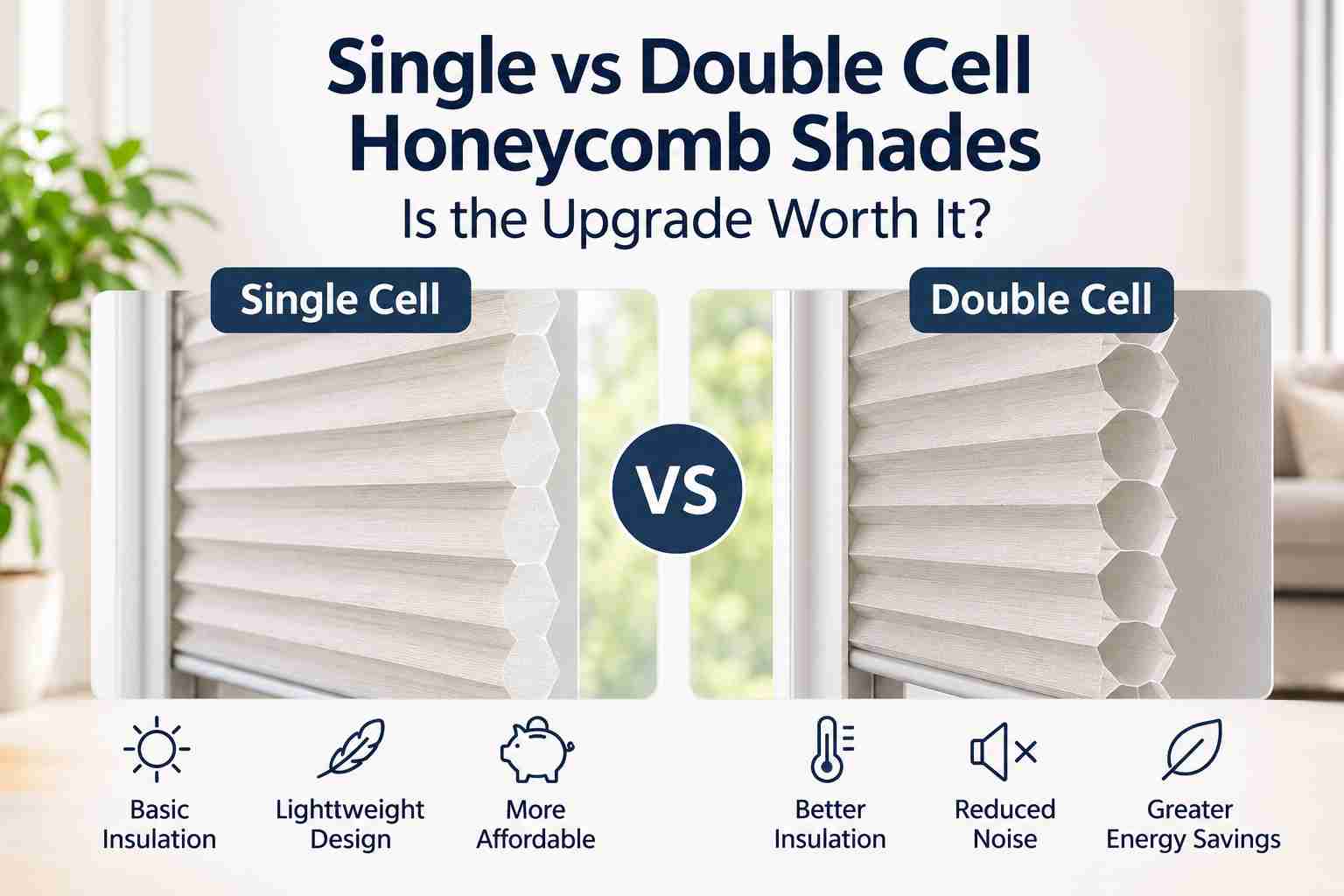
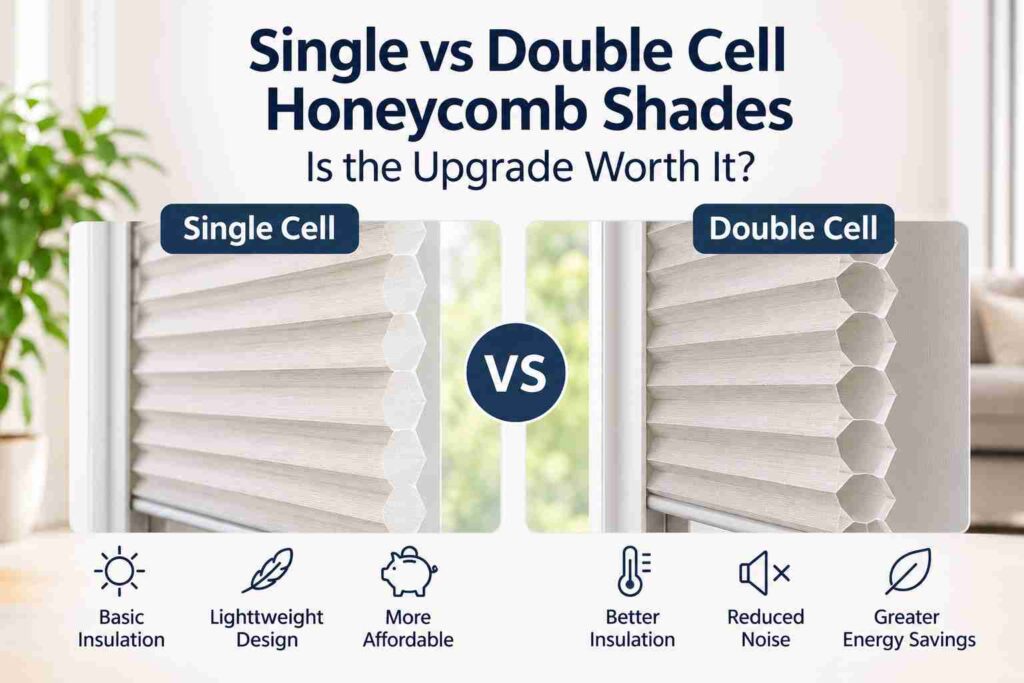
A honeycomb shade is made of cells, tubes of fabric that trap air. Single cell has one row of them. Double cell has two rows, one behind the other.
| Feature | Single Cell | Double Cell |
|---|---|---|
| Layers of air pockets | One | Two |
| Insulation | Good | Higher, in general |
| Thickness when closed | Slimmer | Deeper |
| Stack when raised | Smaller | Taller |
| Sound dampening | Modest | Slightly better |
| Price | Lower | Higher |
| Light control | Sheer to blackout | Sheer to blackout |
The air pockets matter because still air resists heat movement. More pockets in the path means more resistance. How much more varies by fabric, manufacturer and how the shade is tested, so compare spec sheets using the same method, not a sales line.
Does the Upgrade Matter in Calgary?
Short answer: sometimes. Our winters are long and cold, and windows are the weakest point in most walls. We dug into that in our post on cellular (honeycomb) shades and energy savings in Calgary. Where double cell earns its keep:
- Large windows and patio doors: There’s a lot of glass losing heat.
- North-facing rooms: They never get free solar warmth.
- Older windows: Especially anything that’s drafty or single-pane.
- Bedrooms: A cold window beside the bed is hard to ignore.
- Basements: They run cooler to begin with.
Where it matters less: small windows, rooms already warm, and homes with newer triple-pane glass. The gain from a second cell layer shrinks when the window already does most of the work.
The Gap Problem Nobody Mentions
Here’s something that surprises people. A shade that doesn’t seal well around the edges loses part of its benefit, single or double. Air slips past the sides and the top. An outside mount that overlaps the frame helps, and so do side channels where they suit the window. A well-fitted single cell can outperform a sloppy double cell. Measure properly, and mount with the gaps in mind.
Light Control: The Same in Both
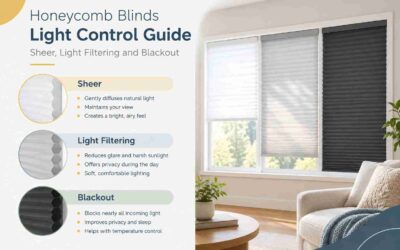
You can get either construction in sheer, light-filtering or blackout. The cell count doesn’t change the fabric opacity. If light levels are your main concern, our honeycomb blinds light control guide covers the three opacities in depth. One note: blackout fabric plus double cell is the heaviest-feeling combination, and it’s the one most people pick for bedrooms.
Sound: A Small Bonus, Not Soundproofing
The air pockets absorb a bit of noise, and double cell tends to absorb slightly more. That can take the edge off street sound in a condo. It won’t turn a loud street into a quiet one. Treat it as a bonus.
Stack Height and Tall Windows
When you raise a double cell shade, the fabric folds into a taller stack than a single cell does. On a short window, that stack can cover glass you wanted to see through. On very tall windows, it’s something to check. Ask for the stack measurement for your size before you commit.
Price: What You’re Paying For
Double cell costs more because there’s more fabric and more construction. We won’t quote a figure here, since it changes with size and fabric. As a rule, expect the gap to widen on bigger windows, so the upgrade is cheapest to justify on small ones, and most valuable on large ones. Worth weighing both.
Which One for Which Room
| Room | Suggested | Why |
|---|---|---|
| Primary bedroom | Double cell, blackout | Cold control and darkness |
| Nursery | Double cell | Steady temperature near the crib |
| Living room, large windows | Double cell | Biggest heat-loss area |
| Kitchen | Single cell | Smaller window, easier clean |
| Home office, south-facing | Single cell, light-filtering | Light and glare matter more than insulation |
| Basement | Double cell | Cooler walls and windows |
| Small bathroom window | Single cell | Low gain from the upgrade |
| Condo with newer glass | Single cell | Less to gain |
For rooms where summer heat is the problem, single cell does a good job too. We touch on that in our post on cellular blinds for summer.
How to Compare Quotes
Before you sign off on a quote, run through these five points:
- Get the same fabric and opacity in both single and double so you’re comparing construction only.
- Ask for the published R-value or thermal rating, and how it was tested.
- Ask about the stack height for your window size.
- Ask whether the mount overlaps the frame or sits inside it.
- Ask about cordless or motorized options, since the weight difference can affect the choice.
What We’d Tell You at the Showroom
If a window is big, cold, or beside a bed, go double. If it’s small, or in a newer home with good glass, single cell is a smart buy and the money’s better spent elsewhere. If you’re weighing the whole house, our overview of energy-saving window treatments helps you prioritize. Our free in-home consultation can also settle it window by window.
Key Takeaways
- Double cell has two rows of air pockets, single has one.
- Double usually insulates better, but results vary by fabric and test method.
- It pays off most on large, cold, north-facing or older windows.
- Fit and gaps matter as much as the cell count.
- Light control is the same in both constructions.
- Sound dampening is a small bonus in either.
- Check the stack height on short windows.
Summary
Double cell is a worthwhile upgrade where windows lose a lot of heat, and unnecessary where they don’t. Match the construction to the room, get the fit right, and compare spec sheets honestly.
Frequently Asked Questions
Are Double Cell Honeycomb Shades Worth It in Calgary?
Often, for large, north-facing, drafty or bedroom windows. For small windows in newer homes with good glass, single cell is usually enough.
Do Double Cell Shades Block More Light?
No. Light control depends on the fabric opacity, not the number of cells.
Do Honeycomb Shades Reduce Noise?
A little. The air pockets dampen sound, and double cell slightly more. They won’t soundproof a room.